 Anas Ikhwan
For fourteen years Syria was cut off from the world economy. Then, starting in 2025, that changed. The US, the EU, the UN and others lifted almost all of the sanctions that had stopped the world from doing business with the people of Syria.
So you would think Syrians can now bank, shop and use online services like everyone else. Not yet. And a lot of what you read about this is not accurate. It is mostly hype and social media, if you ask me.
Here is the full story. Where it started, where we are now, and what is still in the way.
So how did it all start?
First, what is a sanction? A sanction is a rule a government makes to stop or limit business with a country. Block the money, block the trade, and you put pressure on the people in charge. Simple idea. Heavy effect. Syria collected these rules for decades.
It started in 1979, when the US put Syria on its list of State Sponsors of Terrorism. Once a country is on that list, a wall of restrictions comes with it. Aid stops. Weapons sales stop. Many exports need a special licence. And banks get nervous.
Then in 2010 came a second problem. The Financial Action Task Force, or FATF, flagged Syria as high risk. FATF is the global watchdog for money laundering, and banks all over the world follow its lists. When FATF says a country is high risk, banks pull back, because nobody wants the fine.
In 2011 the war started. The EU and the US imposed heavy sanctions. Whole sectors were cut off. Oil, banking, trade.
Then the big one. In 2019 the US passed the Caesar Act. This one was different. It did not just punish American companies for dealing with Syria, it punished anyone, anywhere. A company in South America or in Europe could be hit for doing business in Syria. That is called a secondary sanction, and it scared off the whole world, not just the US.
By 2020 Syria was one of the most sanctioned places on earth.
- 1979 The US names Syria a State Sponsor of Terrorism.
- 2010 The Financial Action Task Force (FATF), the global money-laundering watchdog that banks obey, flags Syria as high-risk.
- 2011 The EU and the US impose heavy sanctions as the war begins.
- 2019 The US Caesar Act: secondary sanctions that scare off even non-US firms.
How did the walls come down?
In December 2024 the Assad regime fell, and everything changed. The sanctions had been built for a government that no longer existed, so one by one the world started taking them down.
In May 2025 the EU moved first and lifted its economic sanctions on Syria. The trade and money rules that had been in place for years were dropped.
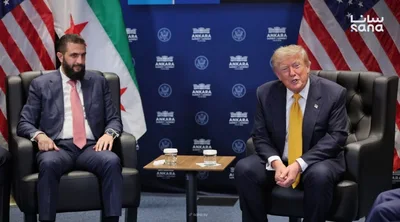
A month later, in June 2025, the US followed, and President Trump removed most US sanctions on Syria in one go.
Inside Syria the door opened too. A new investment law, Decree 114 of 2025, now lets a foreign investor own 100% of a business, with no local partner required.
In November 2025 the UN acted. The Security Council passed Resolution 2799, which lifted the asset freeze and the arms embargo tied to the old terrorism listings.
Then in December 2025 the US went further and repealed the Caesar Act.1 Section 8369 of the National Defense Authorization Act for Fiscal Year 2026 (Public Law 119-60), signed on 18 December 2025. The repeal has no conditions, but for four years the President must report to Congress every 180 days on whether Syria's government meets eight conditions, from fighting ISIS to protecting minorities. After two reports in a row that cannot certify them, the President may consider targeted sanctions on individuals. The wall that had scared off the whole world was gone.
In May 2026 the EU restored its Cooperation Agreement with Syria, the framework for normal trade and ties between the two.
And in August 2026 came the last big one. On 24 August the US rescinded Syria's State Sponsor of Terrorism designation, the same label from 1979.2 US Department of State, Rescission of Syria's Designation as a State Sponsor of Terrorism, 24 August 2026. The rescission was published in the Federal Register as 91 FR 55965 on 31 August 2026. Forty-seven years later, it was lifted. I have to say it: this is a big achievement.
So Syria is open and it is business as usual, right? Not quite, not yet.
- 28 May 2025 The EU lifts its economic sanctions.
- June 2025 US Executive Order 14312 lifts most US sanctions.
- 2025 A new investment law, Decree 114/2025, allows 100% foreign ownership.
- 6 Nov 2025 UN Resolution 2799 lifts the asset freeze and the arms embargo.
- 18 Dec 2025 The US repeals the Caesar Act.
- 11 May 2026 The EU restores the Syria Cooperation Agreement.
- 24 Aug 2026 The US rescinds the terrorism designation.
What is left, and what is next?
So if the law is open, why is the money still stuck? Because the law is one thing. The money is another.
Doing business with Syria, and moving money in and out of it, is the slow part. A few things have to happen first.
-
The banks are still cautious. The law now lets foreign banks work with Syria, but most are not rushing in, because they would rather stay safe. This is de-risking, and it is important to understand that it is not the law stopping the money. It is the banks choosing to wait.
-
Syria is still on a global money watchlist. Syria sits on the FATF grey list of countries the watchdog does not fully trust yet. This matters, because banks everywhere check that list before they move a single dollar. To get off it, Syria has to rebuild its banking controls and pass a review. That takes months, and maybe longer.
-
A few US rules are still on the books. Syria remains on a US list of countries with tight controls on sensitive technology, mostly weapons and military-grade equipment. For normal software, phones and everyday goods this no longer matters, they are already allowed.3 US Bureau of Industry and Security, Relaxing Export Controls for Syria, 90 FR 42315, 2 September 2025. The rule added license exceptions for Syria, including one for everyday items classified EAR99. But the paperwork to take Syria off those lists completely has not been done yet.
-
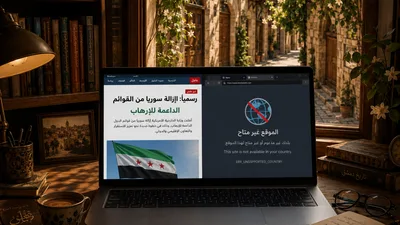
Companies are still blocking Syria on their own. This is the strange one. Many websites and apps still block Syrian users even though, in most cases, the law no longer requires it. They simply have not updated their systems, or their own suppliers still block Syria, so they leave the block switched on. It is a wait and see approach, and it comes from the same place: plenty of companies never understood what the sanctions relief actually permits, so they watch what everyone else does and call it de-risking.
- End 2026 The US eases its export controls.
- 1 June 2027 EU targeted sanctions on former Assad-regime figures expire.
- 2027 FATF upgrades Syria and lifts the high-risk flag.
- End 2027 / early 2028 Banking reopens: correspondent banks, SWIFT, and payment platforms such as Stripe and PayPal.
- 2028 Syria fully unblocked (hopeful).
The bottom line
So where are we really?
The legal walls are down. That is done, and it is a big deal.
The money and the technology are the next wall, and it is still standing. Banks need to get comfortable. Syria needs to clear the watchlist. Companies need to flip a switch they have been ignoring.
Every one of these steps unlocks something real. When the banks reconnect, businesses can get paid. When Syria clears the watchlist, the banks relax. When companies update their systems, Syrians get back the everyday tools the rest of us take for granted.
None of this is finished. But for the first time in fourteen years, it is actually moving. And knowing exactly where we stand beats believing the news.
Anas Ikhwan works in tax and global trade. The analysis and the views here are his own.
Notes
-
Section 8369 of the National Defense Authorization Act for Fiscal Year 2026 (Public Law 119-60), signed on 18 December 2025. The repeal has no conditions, but for four years the President must report to Congress every 180 days on whether Syria's government meets eight conditions, from fighting ISIS to protecting minorities. After two reports in a row that cannot certify them, the President may consider targeted sanctions on individuals.
-
US Department of State, Rescission of Syria's Designation as a State Sponsor of Terrorism, 24 August 2026. The rescission was published in the Federal Register as 91 FR 55965 on 31 August 2026.
-
US Bureau of Industry and Security, Relaxing Export Controls for Syria, 90 FR 42315, 2 September 2025. The rule added license exceptions for Syria, including one for everyday items classified EAR99.