 Omar Albeik
A Syrian medical student, who asked us not to publish his name, is trying to do what thousands of his peers do: pass the exams, get certified abroad, and practice medicine in the United States or Australia. One step keeps stalling it. Not an exam. A signature.
MyIntealth is the portal international medical graduates use to manage their ECFMG certification. To open an account, applicants must first complete a notarization. It is a short interview, two minutes at most, in which an official confirms their identity and checks their information. For most doctors it is a formality done online, from home. For Syrians, that option does not exist.
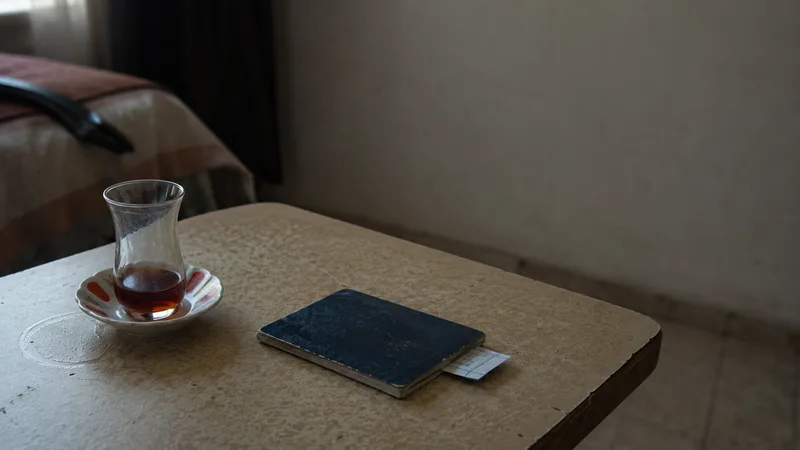
"Anyone else can do it from their living room, with a cup of tea next to them, for about fifty dollars," he says. "We have to leave the country for two minutes."
It was not always this hard. The notarization used to happen in Damascus, at the U.S. Interests Section housed in the Czech embassy. Last October, that closed. An official notice said the section would no longer verify documents and pointed applicants to the U.S. embassies in Beirut or Amman. Both soon turned unreliable. When war broke out in the region, the embassies shut from early March until May. Applications froze. Exams slipped.
Beirut reopened briefly, then closed again with no appointments. Today Amman is the only door left, and the timing alone makes it punishing. Notary slots fall on Thursdays only, so applicants travel the day before and present themselves the next morning, between 8:15 and 8:45. Only two buses run back to Damascus, at 7 a.m. and noon. The early one leaves before the appointment, so everyone is forced onto the noon bus, and it goes no further than Damascus. Anyone from another province cannot get home that day, and with nothing running on Friday, they wait until Saturday. How long the whole trip takes varies with where you start and how you travel; his own ran about four days, door to door.
What one signature costs a Syrian
- Consular fee: $110
- Three forced hotel nights: about $100
- Notarization, meals, and transport on top of that
Between $260 and $280 for a single stamp, before the days of work and study lost. Anywhere else, the same task is done from home for about $50.
For some, even Amman is out of reach. Palestinian-Syrians are currently barred from entering Jordan, which leaves them no route at all.
"The only accusation against us is our nationality."
And paying once is no guarantee of finishing. After he travelled, notarized, and spent close to $400, he uploaded the document to the portal. It was rejected. The reason: his ID photo was too old. MyIntealth requires a photo taken within the last six months, a rule he says was never made clear. He had uploaded a current photo, but a glitch on the site attached an older one instead. Now he has to make the entire trip again. By his estimate, this single notarization will end up costing him around $800.
He is not asking for special treatment, only for the two-minute task the rest of the world does at a kitchen table. "It is a waste of money and time," he says, "and exhausting, for nothing."
A barrier that outlived its reason
His trip is one face of the problem. The block runs deeper than the notary's desk, into the service itself. When Unblock Syria tested MyIntealth from inside Syria, the public site opened normally, but the application portal, the part international medical graduates need, redirected to a compliance page run by Salesforce, the software platform it is built on. That page named Syria directly, under United States export control and sanctions law.
That is not a choice Intealth made about Syrian doctors. It is a default setting inside Salesforce that treats anyone inside the country as off-limits. What makes it harder to accept is that the setting no longer matches the law. In December 2025, the United States eased its sanctions on Syria, and the country came off the Treasury's embargoed list. The legal basis for the wall was lifted months ago. The wall stayed up.
Both barriers, the desk in Amman and the page on the screen, trace to the same place: a designation the United States has already relaxed, still enforced by systems that have not caught up.
Where this stands
Unblock Syria has been pushing on this since a report from inside Syria first confirmed the block in March. A volunteer wrote to Intealth, the nonprofit behind the portal, pointing to the December sanctions easing and the Treasury's own documentation. The team followed up directly. So far the only reply has been an automated acknowledgment, and the case remains open and under review. More than 250 people have already added their vote to see it resolved.
The fix is not complicated. It is one setting, brought in line with a law that has already changed. Until that happens, the cost keeps landing on people like him: medical students and graduates who, before they can so much as register for an exam, are sent across a border just to prove who they are.
Add your vote and follow the progress here: